

The VAD Review Board has released its 2024-2025 Annual Report which shows that VAD deaths accounted for 1.6% of deaths in South Australia in the last 12 months.
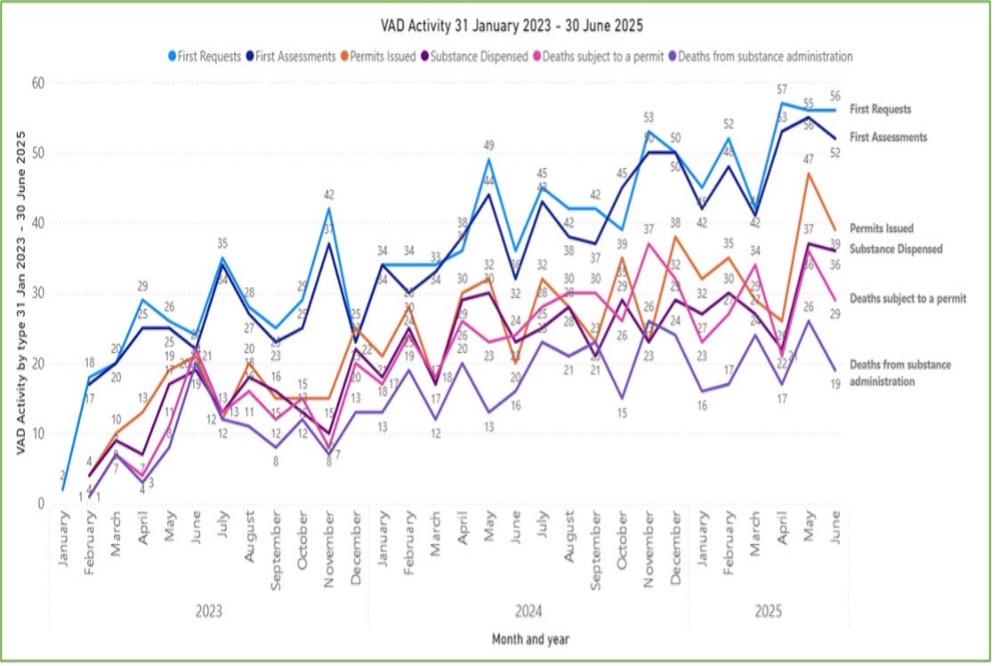
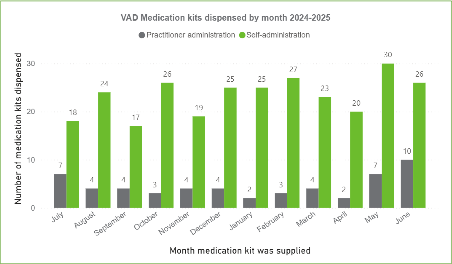
There has been an increase in awareness of VAD with 353 people with a VAD Permit dying during the year, compared with 214 in 2023-24. Of the 353 people, 251 died using the VAD substance, 200 through self administration and 51 through practitioner administration; 102 of those people (29%) who had a VAD Permit died without using the VAD substance. The proportion of people who died without using the VAD substance, but who had a VAD Permit and were eligible to receive the VAD substance, is consistent with outcomes around the world.
The Board is keen to provide transparency and accountability in its oversight of voluntary assisted dying in South Australia and provides an enormous amount of data on the operation of VAD in SA. The report contains many helpful charts, tables and graphs summarising the data. (report available here)
Some of this data shows
- An average of 46 first assessments were carried out each month (32 the previous year)
- An average of 34 VAD Permit applications were processed each month (23 the previous year)
- 3,464 forms were submitted through the VAD Portal
- 1% of registered medical practitioners in SA have completed the VAD training
- The six and 12 month prognosis is an unreliable criteria with some people dying over 400 days after first being assessed as eligible
- 57% of applicants were male and 43% were female
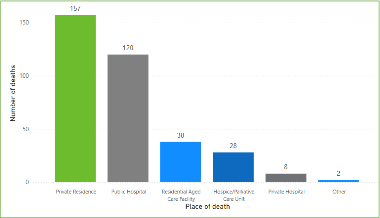
- 38 people (11%) died in a residential aged care facility
- 8 people (2%) died in a private hospital
- 261 people (74%) had cancer
- a typical applicant is male, in their 70s, Australian-born, living in a private residence in metropolitan Adelaide, and receiving palliative care for terminal cancer.
Examples of data presentation
The Board reflects on some of the ongoing challenges of the legislation in South Australia, such as the “gag” clause which prohibits a health professional from mentioning VAD as an end of life choice in SA and Victoria until the person themselves asks about it, and the Commonwealth ban on using telehealth for consultations on using the VAD substance – the “telehealth ban”.
The report notes that one person was denied VAD because they had not been a resident in SA for the required 12 months and there is no avenue for appeal on the basis of residency.
The cover artwork of the report is a beautiful painting by Badimia-Noongar-Yamatjiartist from WA Nerolie Bynder, with her interpretation of voluntary assisted dying.