

The NT story
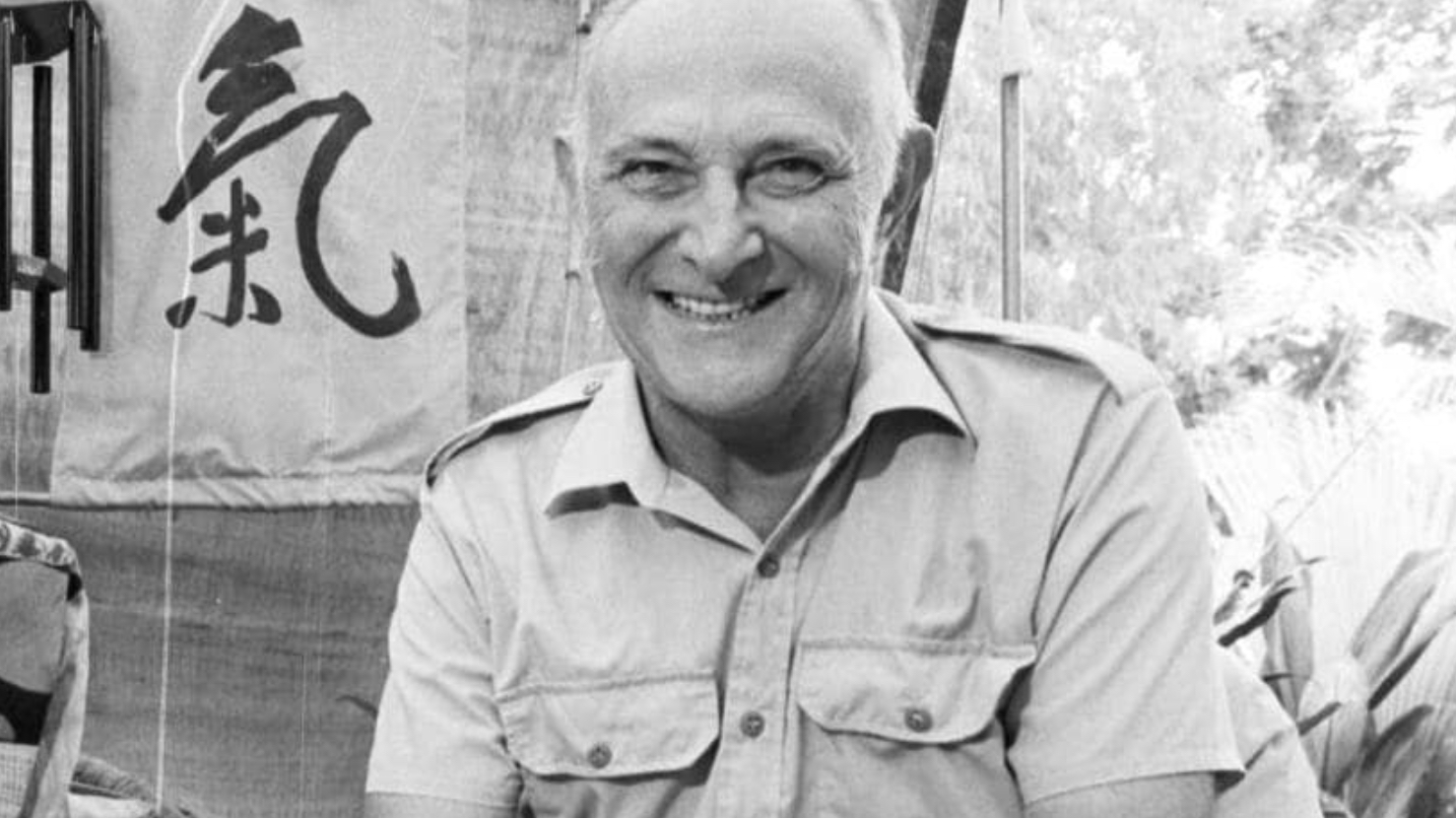
Today marks 30 years since Bob Dent used the first Rights of the Terminally Ill Act in the Northern Territory to end his suffering. Bob was the first person in the world to die using a voluntary assisted dying law. Bob was suffering from prostate cancer which had spread through his body. His letter to Federal MPs dictated the day before his death tells the devastating story of his illness (see below). His wife Judy still lives in Darwin and has been campaigning for the restoration of the right to a compassionate end of life through a medically assisted death ever since.
The second Rights of the Terminally Ill Act was passed by the NT Parliament on August 27, 2026, and will commence in February 2028. At that time VAD will be a legal end of life choice everywhere in Australia.
There are strict criteria in every state and territory, with people needing to make at least three requests - one written and witnessed - and be assessed by two different doctors or nurse practitioners (in some jurisdictions). People need decision making capacity at every stage of the process. Each person must be diagnosed with a terminal illness, which in every jurisdiction except the ACT means they have been diagnosed with six or 12 months to live. In the ACT the illness must be assessed as “advanced”. There are VAD Care Navigators in every state and territory to support people through the process, including to assist them in finding a VAD trained doctor or nurse practitioner to do the VAD assessments.
The NT Rights of the Terminally Ill Act (2026) is very similar to the SA VAD Act (2021).
Key features include
- Criteria of a disease, illness or medical condition likely to cause death within 12 months
- Person can nominate self or practitioner administration
- Doctors must be VAD trained
- Doctor is unable to list VAD in an end of life care plan
- No reference to institutional conscientious objection
- VAD Care Navigator Service listed in legislation
- For practitioner administration, a doctor, nurse practitioner, nurse with five years experience or ATSI health practitioner with five years experience can administer the VAD substance
The debate in the NT Parliament highlighted two features of the NT Act which are also part of the SA VAD Act: the gag clause and the time limited prognosis. The gag clause has not been debated in an Australian Parliament before. The gag clause was introduced in Victoria in 2017 as part of the government Bill and no debate took place on this clause. It was then adopted as part of the SA legislation. No other jurisdiction includes the gag clause. Victoria last year amended their VAD Act to remove the gag clause. The NT debate showed the complete absurdity of the prohibition on a doctor listing VAD as an end of life choice in an end of life treatment plan. Patients are supported to make an informed decision about their end of life treatment; yet the doctor is prohibited from informing them about VAD. The same doctor can talk to a group of patients about VAD, including their patient; the medical practice receptionist can provide a brochure on VAD to patients in the waiting room; but the most informed person about the patient – the doctor - is not allowed to inform the person about VAD.
The time limited prognosis is widely recognised as not being evidence based.
The NT Hansard provides a step by step guide to why both the time limited prognosis and gag clause should be removed from the SA VAD Act. (NT Hansard, August 27, 2026)
Bob Dent’s letter to Federal MPs.
“I was diagnosed with prostate cancer late in 1991. In December I was sent to a specialist urologist in Brisbane for a bone scan and possible prostatectomy [removal of prostate gland].
Before such a difficult procedure could be performed, it was necessary to check the lymph nodes in the groin area to see if the cancer had spread out of the prostate. An incision was made across my lower abdomen from hipbone to hipbone and several lymph nodes were removed. They were all cancerous.
It was now too late to remove the prostate and instead, both testicles were removed. The incision was sewn up, but two days later a large haematoma [blood clot] developed at the right-hand end of the incision. I had then to return to theatre for the incision to be recut and resewn.
My bone scan at this stage was inconclusive so I was sent back to Darwin hoping that the removal of my testicles and consequent loss of testosterone production would stop the cancer progressing. Unfortunately this also made me impotent. (I had been told that impotence was a remote possibility.)
Six months later a hernia developed under the same right-hand end of the haematoma. Darwin specialist surgeon Mr Dan Campbell repaired the hernia, but one year later it popped out again. Mr Campbell did a second repair job on the hernia, and again one year later it recurred. Mr Campbell was apprehensive about attempting a third repair on the same site.
I approached another specialist surgeon, Mr Jonathan Wardhill, but he took one look and declined to even consider such a repair. Fortunately, a plastic and reconstructive surgeon, Mr Chandra Arianayagam agreed to do the job, and this repair is still holding.
By mid-1995, I was having difficulty urinating as the cancer in the prostate gland had closed off the urethra. I had to have a catheter inserted in order to empty my bladder. I continued with daily self-catheterisation until the passage closed right over. An indwelling catheter and leg bag was the next step.
In August 1995, a trans-urethral resection of the prostate (TURP) was done by a Perth urologist, to chip away the cancer and reopen the urethra, so that I did not have to use the catheter and leg bag to collect the urine.
By May 1996, the urethra had once again become blocked and I again had to make use of catheter and leg bag — an embarrassing and uncomfortable situation, especially in Darwin’s climate. In June 1996, I had another TURP and this operation worked reasonably well, but the rest of my body was deteriorating quickly.
I have lost 25 kg in weight. My latest blood tests, taken on 2 September 1996, indicated an acceleration of the cancer, with the prostatic specific antigen rising to 1298 (normal is 0 to 4). The red cell picture was suggestive of infiltration of the bone marrow by the cancer.
This was confirmed by a chest X-ray. The full results of these tests were withheld from me by Dr Guy Bannick of Palliative Care. I have always wanted to know everything, the bad news as well as the good. I could easily have broken some of my ribs by allowing myself to be hugged and surely should have been warned of this?
Dr Philip Nitschke, my after-hours doctor, requested a copy of the X-ray report from the Darwin Hospital for me. The X-ray also revealed an area of collapsed lung which could have been contributing to my breathless distress.
Two specialists, Mr Wardhill, who performed the 1996 TURP, and Dr Sid Selva, oncologist, have both said nothing further can be done. (I did have three months hormonal therapy supervised by Dr Selva, but the cancer is hormone resistant and was not slowed by this treatment.) Already my urine flow is diminished. Further TURPs are not advisable, even if my weakened body could tolerate a general anaesthetic.
I have no wish for further experimentation by the Palliative Care people in their efforts to control my pain. My current program involves taking 30 tablets a day!
For months I have been on a roller-coaster of pain made worse by the unwanted side-effects of the drugs.
Morphine causes constipation — laxatives taken work erratically, often resulting in loss of bowel control in the middle of the night. I have to have a rubber sheet on my bed, like a child who is not yet toilet trained.
Other drugs given to enhance the pain-relieving effects of the morphine have caused me to feel suicidal to the point that I would have blown my head off if I had had a gun.
I can do little for myself, and require 24-hour nursing care. My haemoglobin has fallen to 8.3 (normal is 13.5 to 18.5). My red cells are decreased in number and deformed because of the cancer in the bone marrow. This anaemia causes shortness of breath and fainting because of the cells’ inability to carry the required oxygen.
An attempt was made to alleviate the symptoms of the anaemia by giving me two units of a healthy person’s blood. The procedure took all day, was uncomfortable, and did no good whatsoever. There is now a constant fear of a fall which could cause terrible injury to my fragile bones. I cannot even get a hug in case my ribs crack. If I were to keep a pet animal in the same condition I am in, I would be prosecuted.
I have always been an active, outgoing person, and being unable to live a normal life causes much mental and psychological pain, which can never be relieved by medication.
I read with increasing horror newspaper stories of Kevin Andrews’ attempt to overturn the most compassionate piece of legislation in the world. (Actually, my wife has to read the newspaper stories to me as I can no longer focus my eyes.)
The Church and state must remain separate. What right has anyone, because of their own religious faith (to which I don’t subscribe), to demand that I behave according to their rules until some omniscient doctor decides that I must have had enough and goes ahead and increases my morphine until I die?
If you disagree with voluntary euthanasia, then don’t use it, but don’t deny me the right to use it if and when I want to.
I am immensely grateful that I have had the opportunity to use the Rights of the Terminally Ill Act to ask my doctor Philip Nitschke to assist me to end this interminable suffering and to end my life in a dignified and compassionate manner.
I did want to write this statement in my own hand, but the weakened state of my body makes this impossible. It has been dictated by me and written down for me by my wife.”
Bob Dent, Darwin, September 21, 1996
See also Bob Dent bio https://digitalcollections.cdu.edu.au/nodes/view/4994